
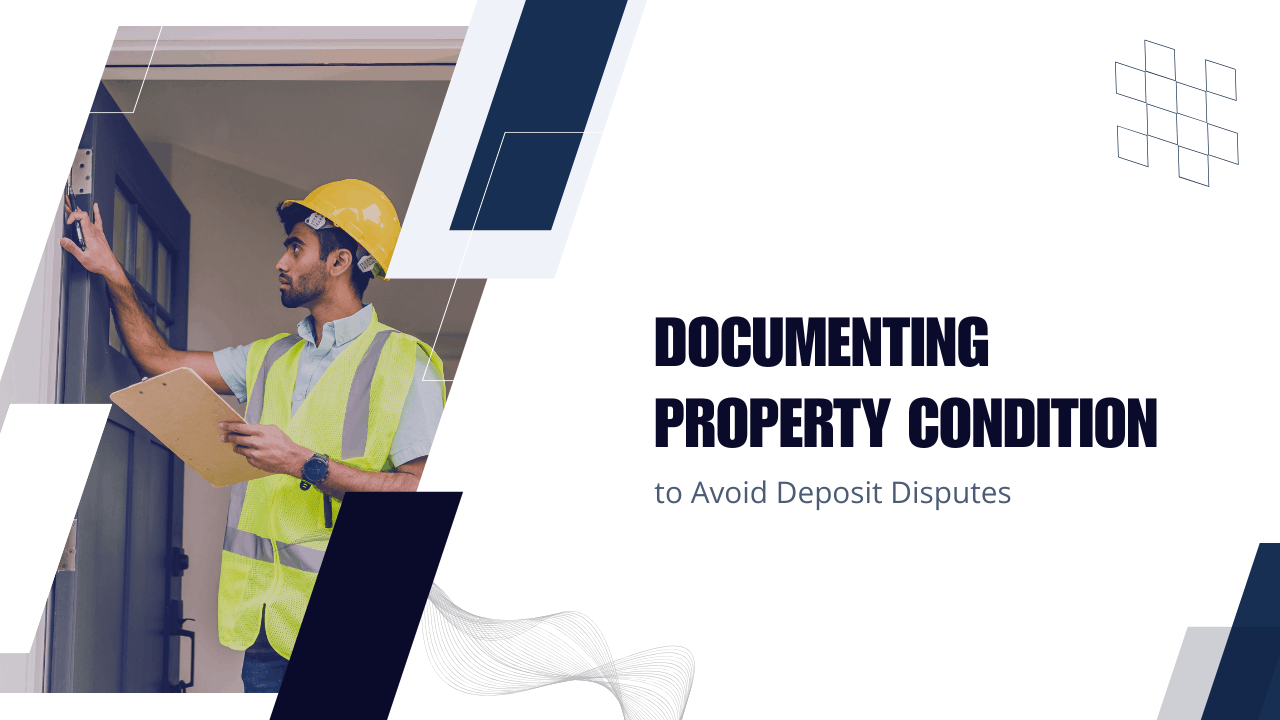
How important is documentation in avoiding security deposit disputes?
It’s everything.
For many California rental property owners, security deposit disputes are one of the most frustrating and avoidable parts of managing rental property. The good news is that clear, consistent, and legally compliant documentation can dramatically reduce conflicts, protect investments, and help ensure owners stay on the right side of California landlord-tenant law.
California has some of the strictest rental regulations in the country. This is not news. What we can tell you, as property management experts in Northern California, is that documenting property conditions is an essential part in mitigating the risk of disputes and conflicts.
From move-in inspections to maintenance records and pre-move-out walkthroughs, every step of the tenancy presents an opportunity to create a paper trail that supports fair and defensible deposit decisions.
We’d like to explain why documentation matters, how to do it correctly, and what California law requires when it comes time to return (or withhold) a security deposit. If you have any questions about what you read, don’t hesitate to reach out to us at Bell Properties.
Our Summary:
|
Proving Property Condition in California
Security deposit disputes often come down to one simple issue: proof.
There is no need to worry about a situation where tenants claim damage was pre-existing while landlords believe it occurred during the tenancy. Without documentation, these disagreements become subjective, and landlords frequently lose.
Proper documentation:
Establishes a clear baseline of property condition
Distinguishes normal wear and tear from tenant-caused damage
Supports lawful deposit deductions
Protects property owners in small claims court or mediation
In California, well-organized documentation can be the deciding factor in whether a landlord prevails in a dispute or gets dragged into court.
Move-In Inspections: Establishing the Baseline
 The move-in inspection is arguably the most important step in avoiding future deposit conflicts. This is when we can define the starting condition of the property and set expectations with the tenant. It’s important that each move-in report has a written component and then photographic evidence.
At the beginning of the tenancy, landlords need to complete a detailed move-in condition checklist. This document should cover every major area of the property, including:
Walls, ceilings, and flooring
Appliances
Cabinets and countertops
Bathrooms and fixtures
Windows, doors, and locks
Outdoor areas, if applicable
Tenants should be encouraged to review the checklist carefully, add comments, and sign it. Providing tenants with a copy reinforces transparency and shared understanding. It also demonstrates that property conditions were agreed upon before the tenancy began.
Written descriptions alone are helpful, but photos and videos are far more persuasive and now, they are legally necessary. High-quality, date-stamped images of the property at move-in create indisputable evidence of condition.
Best practices include:
Photographing every room from multiple angles
Capturing close-ups of existing damage, wear, or stains
Taking photos of appliances while they are clean and functional
Storing files securely with the tenant’s name and move-in date
These images become invaluable months or years later when memories fade and disagreements arise.
If you’re not sure your move-in inspection reports are good enough to establish property condition, contact us at Bell Properties. We can help.
Documenting Repairs and Maintenance Throughout the Tenancy
Property condition is not static. Over the course of a tenancy, repairs, upgrades, and routine maintenance can significantly change the condition of a unit. Documenting these changes is just as important as documenting the move-in condition.
Keeping detailed maintenance records shows that the property has been properly cared for and that issues were addressed promptly. This documentation can help counter claims that damage resulted from neglect rather than tenant behavior. Records should include:
Dates of repair requests
Description of the issue
Work performed
Invoices or receipts
Before-and-after photos
For example, if a leaking sink was repaired mid-tenancy and later the cabinet shows water damage, these records can clarify whether the issue was resolved or worsened due to misuse.
When landlords improve a property, such as installing new flooring, repainting walls, or upgrading appliances, it’s important to document these changes. This establishes a higher standard of condition going forward and helps justify deductions if those improvements are later damaged.
Upgrades should be recorded with installation dates, costs, and photos of completed work. This is particularly important in California, where landlords cannot charge tenants for normal wear and tear but can deduct for damage beyond it.
Move-Out Inspections in California Rentals: Closing the Loop
The move-out inspection is where all prior documentation comes together. It’s the final opportunity to assess the condition of the property and compare it to the move-in baseline. At Bell Properties, we like to compare the move-in inspection report with the move-out conditions that we find after a tenant vacates. We’ll use the original move-in checklist as a reference and take new photos from the same angles as the originals. Our inspection report notes any damage beyond normal wear and tear and identifies cleaning or repair needs attributable to the tenant
Consistency is key. Using the same inspection format for move-in and move-out helps demonstrate fairness and objectivity.
California’s Pre-Move-Out Inspection Requirement
One of the most important and often overlooked legal requirements in California is the pre-move-out inspection, also known as the initial inspection.
What does the law require? Under California Civil Code §1950.5, landlords must offer tenants the right to a pre-move-out inspection before the tenancy ends when the tenant is vacating. This inspection gives tenants an opportunity to:
Identify potential deductions
Make repairs or clean the unit themselves
Avoid unnecessary charges
The landlord must provide written notice of this right, typically within a reasonable time after either party gives notice to end the tenancy.
If the tenant requests the inspection, IT must occur no earlier than two weeks before move-out. At this point, the landlord must provide an itemized list of potential deductions and that list must specify issues that could result in charges if not corrected.
We can help navigate this process with tenants. Contact us at Bell Properties.
Security Deposit Return Timeline in California

California law is very clear about the timeline for returning security deposits. Landlords must return the security deposit, or the remaining portion of it, within 21 calendar days after the tenant vacates the property. This deadline is strict. Missing it can result in penalties, including the tenant being entitled to the full deposit plus additional damages.
If a landlord withholds any amount from the security deposit, detailed documentation is required. An itemized statement of deductions must be provided within that 21-day period. Be sure to send tenants:
An itemized list of deductions
A description of each repair or cleaning charge
Photos that document these charges
The cost associated with each item
If repairs are not yet completed, landlords may provide a good-faith estimate, followed later by final invoices.
To support deductions, landlords should include receipts or invoices for repairs and cleaning, photos showing damage beyond normal wear and tear, maintenance records demonstrating prior condition, and any other documentation showing the tenant’s responsibility.
This level of detail not only satisfies legal requirements but also reduces the likelihood of disputes escalating into formal complaints or court cases.
Normal Wear and Tear vs. Damage: Why Documentation Matters
One of the most common sources of conflict is disagreement over what constitutes normal wear and tear. In California, landlords cannot charge tenants for things like minor carpet wear, faded paint, loose door handles, and small nail holes from hanging pictures. However, landlords may deduct for those large holes in walls, unauthorized paint colors, pet damage, and broken fixtures or appliances due to misuse.
Clear before-and-after documentation makes these distinctions much easier to defend.
Managing Documentation and Records as a Northern California Rental Owner

Good documentation is only effective if it’s accessible. Rental property owners should maintain organized files for each tenancy, including:
Signed lease agreements
Move-in and move-out inspection reports
Photos and videos
Maintenance logs
Deposit accounting records
Digital storage systems, cloud-based folders, or property management software can help ensure records are secure and easy to retrieve if needed years later. These things are also expensive to acquire and manage. So if you’d like to work with a property management expert that already has these tools in place, contact us at Bell Properties.
Beyond legal protection, thorough documentation demonstrates professionalism. Tenants are more likely to accept deposit deductions when they see clear, consistent evidence. Transparency builds trust, even at the end of a tenancy.
For owners managing multiple properties, standardized documentation processes also create efficiency and reduce the emotional stress that often accompanies deposit disputes.
Documenting property conditions protects owners and their properties in California’s highly regulated rental environment. Move-in and move-out inspections, photo documentation, maintenance records, and compliance with pre-move-out inspection laws are essential tools for every rental property owner.
Let’s talk about how we can support a better process that results in fewer security deposit disputes. Contact us at Bell Properties.
